.png "HistorSTL — STL Files for 3D Printing Historical Miniatures: Warriors & Military Models")
Last Hope of the Besieged: How Medieval Fortresses Were Defended During the Final Assault
A medieval siege could last for weeks or even months. Behind the fortress walls, food and water supplies were running out, defenders were losing men, and every new assault could become the last.
Yet even when the fall of the fortress seemed inevitable, the garrison often continued to resist.
Why did the defenders refuse to surrender? How did the final assault on a medieval fortress unfold? And what might the last moments of its defense have looked like?
Why Was Capturing a Fortress So Difficult?
A fortress was much more than just a high stone wall.
A medieval defensive system could include walls, towers, gates, moats, and additional fortifications. All of this allowed a relatively small garrison to resist a much larger enemy force.
The attackers had to approach the fortifications under fire from the defenders, scale or destroy the walls, and then engage in close combat.
That is why a siege often turned into a long and exhausting struggle.
How a Medieval Siege Unfolded
Not every commander was eager to send his soldiers into an immediate assault.
A direct attack on fortified positions could result in enormous losses.
Instead, the attacking army could surround the fortress and try to cut off the garrison from food, water, reinforcements, and communication with the outside world.
The confrontation became a battle of resources and time.
However, once the besiegers decided to launch an assault, the situation could change very quickly.
Warriors advanced toward the walls, used ladders and siege equipment, tried to break through the gates, or searched for a weak point in the defenses.
For the defenders, this was the moment when the fate of the entire fortress could be decided within just a few hours.
The Last Line of Defense
The most dramatic stage began after the enemy managed to break through the outer fortifications.
The familiar advantage of the fortress walls disappeared.
The fighting moved into the streets, inner courtyards, and final defensive positions.
It was here that individual warriors, standard-bearers, and the remaining defenders could face a final choice: lay down their weapons or continue to resist.
The banner had a special meaning in such a scene.
As long as it remained raised, it served as a visible symbol that the garrison was still fighting.
Why Did the Defenders Keep Fighting?
To a modern person, it may seem strange to continue fighting when defeat is almost inevitable.
But the reasons could be very different.
For some warriors, it was a matter of military duty.
For others, it was loyalty to their commander, their comrades, or their city.
Families and civilians could be sheltering behind the walls, facing danger if the fortress fell.
Religious beliefs, ideas of honor, and fear of the consequences of surrender could also play an important role.
That is why history contains many episodes in which small groups of defenders continued to resist even after the outcome of the siege had effectively been decided.
The Moment Before the Final Battle
Imagine a fortress after a prolonged siege.
Part of the fortifications has been destroyed.
The ground bears the traces of previous attacks. The remaining warriors understand that the next assault may be the last.
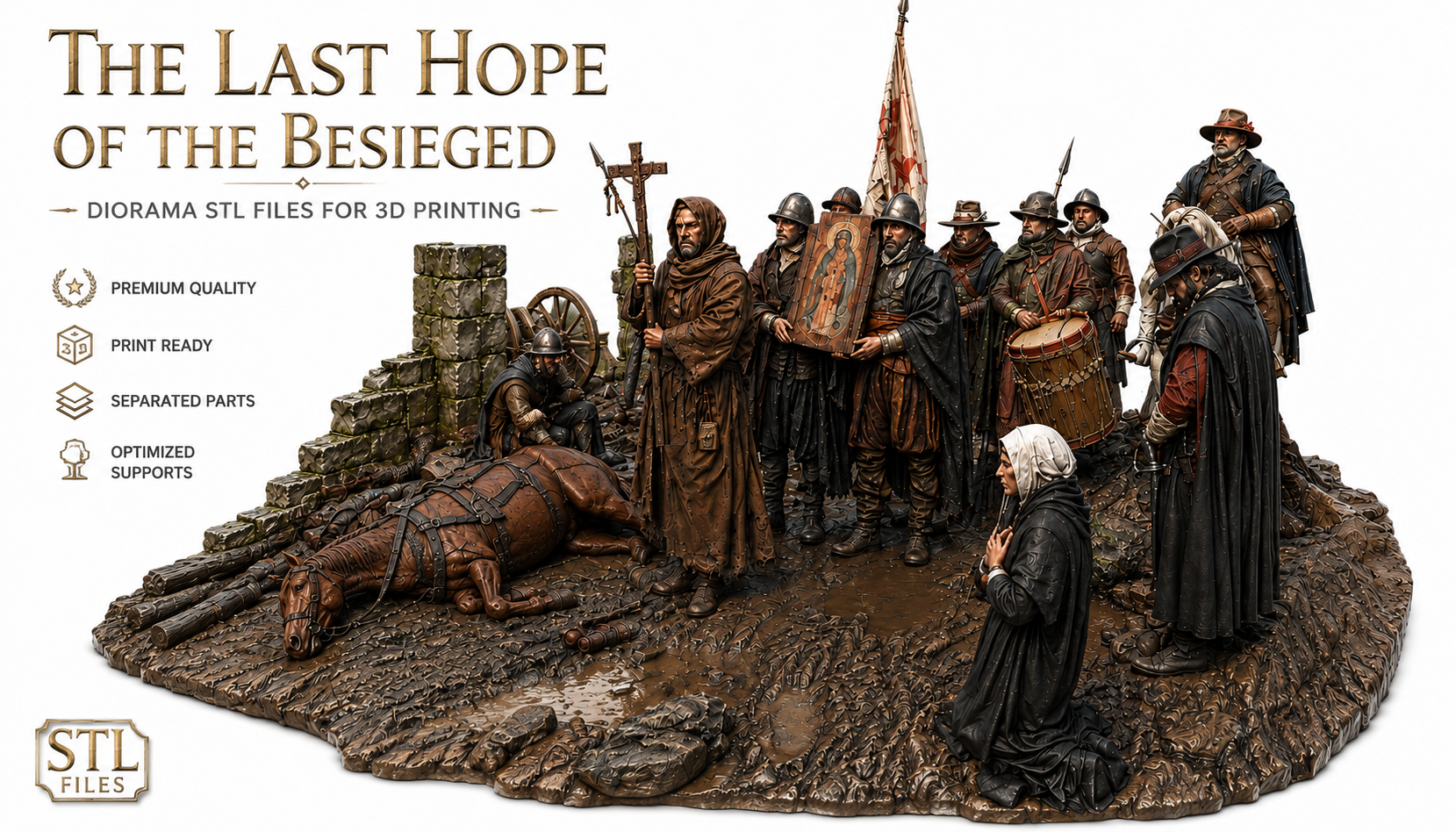
A priest stands nearby.
The standard-bearer still holds the banner.
Exhausted defenders prepare their weapons.
They do not know whether help will arrive.
This is exactly the kind of moment that makes a historical diorama so compelling.
It is not always the scale of the battle itself, but a handful of figures that can tell the story of an entire siege.
“The Last Hope of the Besieged” — History in Miniature
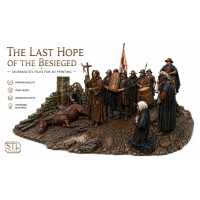
This is the atmosphere captured by the historical 3D diorama “The Last Hope of the Besieged” by HistorSTL.
The composition brings together defenders, elements of fortifications, weapons, a banner, and other details that create a scene of the final moments of defense.
This is not a finished physical miniature shipped by mail.
“The Last Hope of the Besieged” is a digital STL project for home 3D printing.
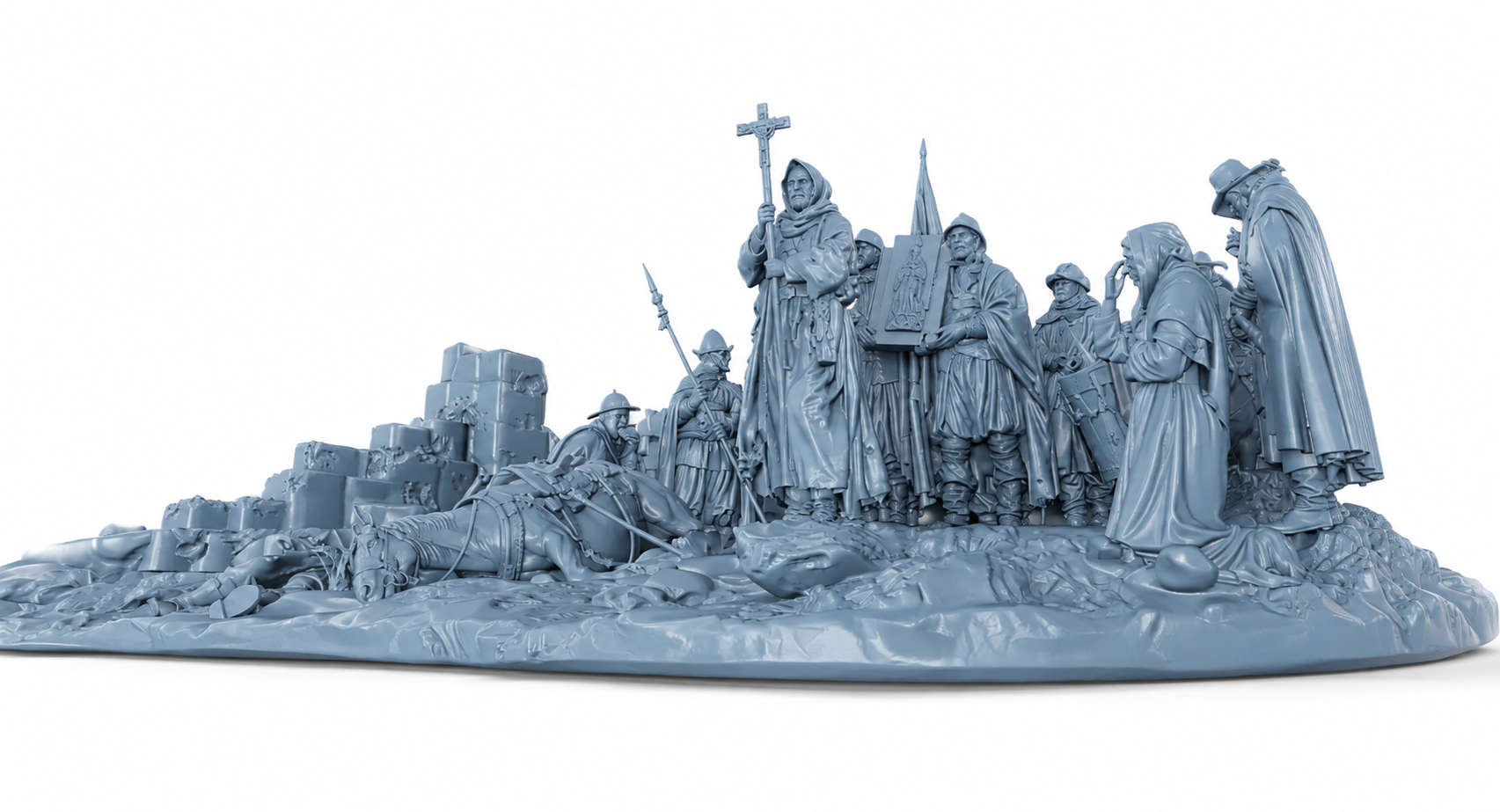
The Last Hope of the Besieged — STL Diorama for 3D Printing
Digital STL Files • Instant Download • High Detail
→ View the diorama and purchase the STL files
Details That Tell the Story
The main strength of a good historical diorama is not simply the number of figures.
What matters is that the viewer can study the composition and gradually discover small details.
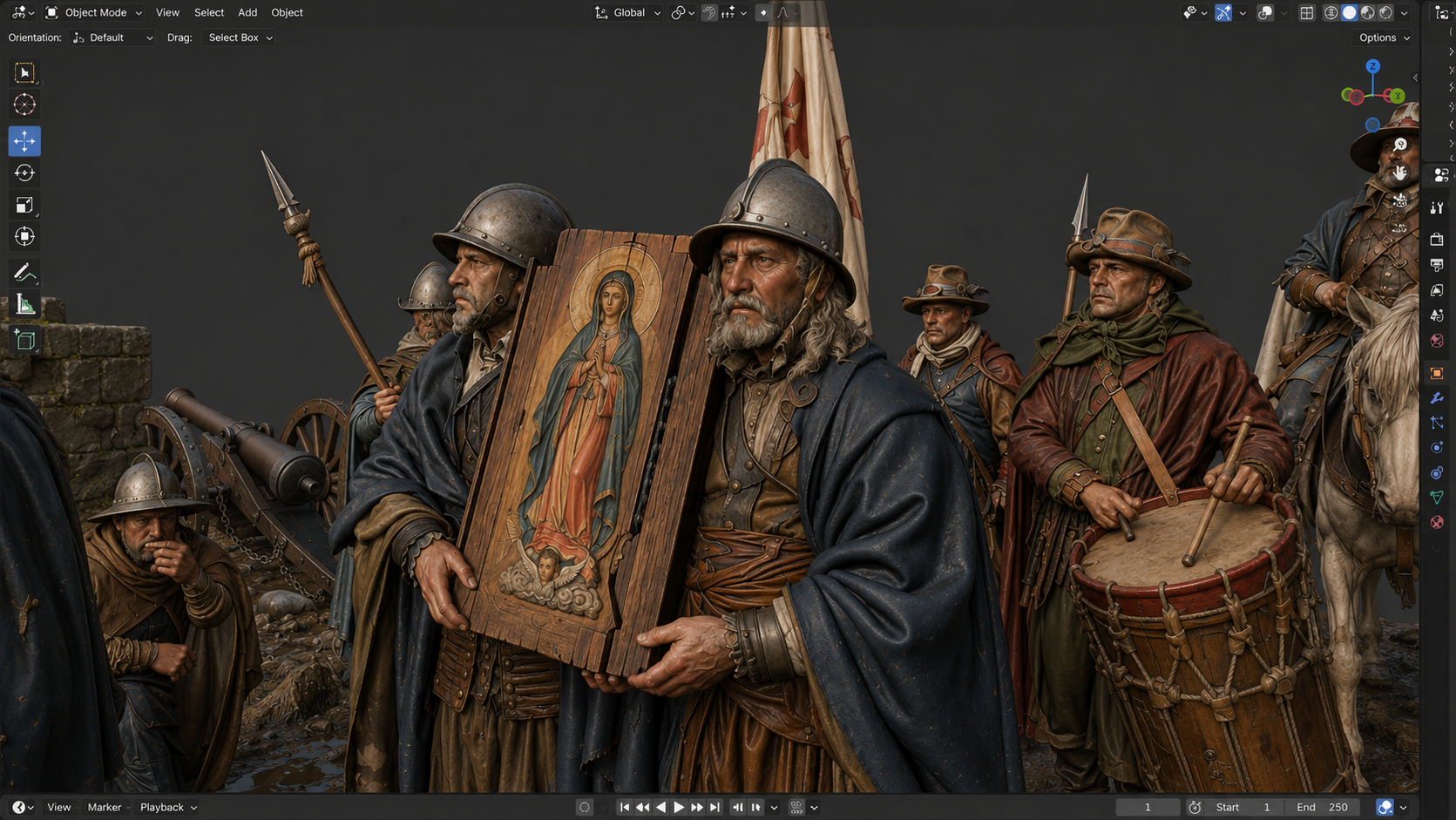
The poses of the warriors, weapons, banner, elements of the fortifications, and the interaction between the characters turn separate 3D models into a complete scene.
After printing, the modeler can emphasize the story even further with painting, battle damage, dust, dirt, and other effects.
As a result, the same digital model can become a completely different finished piece in the hands of different hobbyists.
Who Is This STL Diorama For?
“The Last Hope of the Besieged” is suitable for fans of:
historical miniatures;
medieval military history;
dioramas and scale modeling;
collectible figures;
miniature painting;
high-detail 3D printing.
This composition may be especially appealing to modelers who want more than just a single printed warrior and prefer to build a complete scene with its own story.
What You Receive After Purchase
This is a digital product for home 3D printing.
After purchase, the STL files become available for download — no physical shipping is required.
The model can be scaled for different purposes, from smaller historical miniatures to a large collectible display piece.
For the best reproduction of fine details and textures on historical figures, printing on a resin 3D printer is especially well suited.
→ View all angles of “The Last Hope of the Besieged” diorama and purchase the STL files
Create Your Own Scene of the Final Defense
A historical diorama is fascinating because it allows you to see not just a warrior from a particular era, but an entire moment from the past.
The last defenders.
A banner above the fortifications.
The anticipation of another assault.
And the hope that help may still arrive — even if it is already too late.
After 3D printing, assembly, and painting, this scene transforms from a digital STL file into a physical composition created by your own hands.
If you are interested in medieval sieges, historical miniatures, and highly detailed projects for 3D printing, discover the “ The Last Hope of the Besieged ” diorama and create your own version of this story.
/Arquebusier%20Militia%2016th%20Century%20STL-200x200.png "Renaissance City Militia Arquebusier (16th Century) — STL File for 3D Printing")